Silhouette library

Body shape types explained

These categories are used only for general clothing silhouette guidance. Use them as outfit shortcuts, not as fixed labels or judgments.

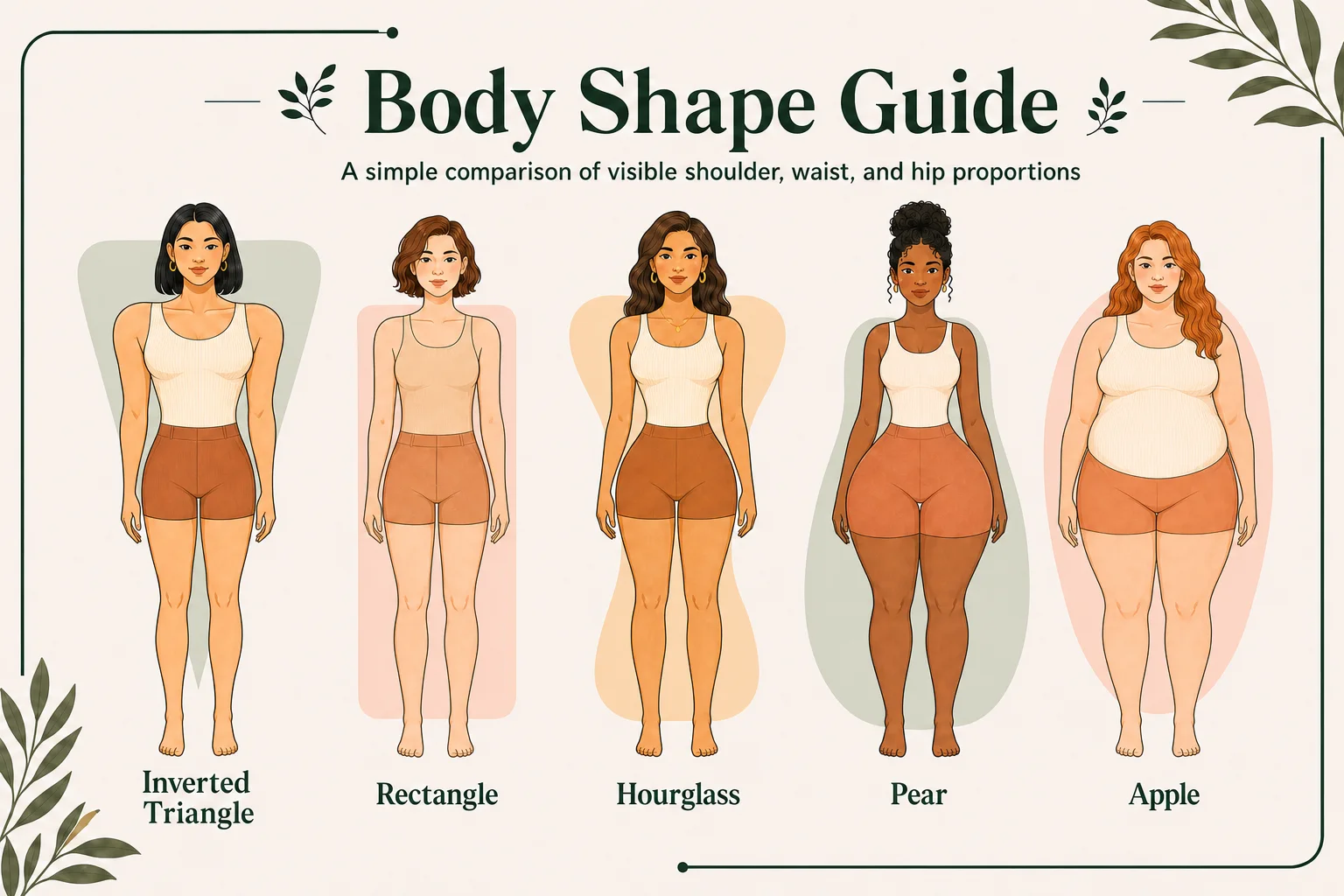
Illustrated comparison of inverted triangle, rectangle, hourglass, pear, and apple body shapes
A visual comparison of the five categories used by Body Shape Detector. The illustration is a guide—not a measurement standard or judgment.
Hourglass

Shoulders and hips appear visually balanced with a more defined waist.

Styling ideas

Try waist-aware pieces, wrap shapes, clean tailoring, and fabrics that follow your natural line without adding unnecessary bulk.

When your goal is balance

If your goal is balance, watch for boxy layers that hide the waist completely.

Photo caveat

A belt, angled pose, or fitted outfit can make waist definition read stronger in photos.

Pear

Hips appear visually wider than shoulders in the clothing silhouette.

Styling ideas

Try open necklines, structured tops, jackets that end cleanly, straight-leg denim, bootcut pants, and A-line skirts.

When your goal is balance

If your goal is balance, be careful with lower-body fabrics that add stiffness or volume exactly where you do not want it.

Photo caveat

Camera height, hip-forward poses, and flared skirts can make the lower body read wider.

Inverted triangle

Shoulders appear visually wider than hips.

Styling ideas

Try lower-body texture, A-line skirts, wide-leg pants, relaxed trousers, and softer shoulder construction.

When your goal is balance

If your goal is balance, strong shoulder pads or puff sleeves may emphasize the upper line.

Photo caveat

Bulky tops, high camera angles, and squared posture can increase shoulder emphasis.

Rectangle

Shoulders, waist, and hips appear relatively similar with limited waist definition.

Styling ideas

Try layering, shaped jackets, strategic waist placement, high-rise bottoms, and contrast between fitted and relaxed pieces.

When your goal is balance

If your goal is shape, very straight top-to-bottom pieces may make the silhouette read flatter.

Photo caveat

Loose clothing can make many silhouettes look more rectangular than they are.

Apple

The midsection appears visually more prominent than shoulders or hips in the clothing silhouette.

Styling ideas

Try soft drape, open jackets, vertical lines, comfortable waist placement, and structured pieces that skim instead of cling.

When your goal is balance

If your goal is flow, avoid stiff waistbands or clingy fabric that catches at the midsection.

Photo caveat

Seated posture, cropped framing, and tight fabric can overemphasize the midsection.

Unknown

Photo quality, pose, clothing, or framing prevents a useful style-guidance result.

Styling ideas

Retake the photo in better light with a straight-on full-body frame and clothing that shows the shoulder, waist, and hip outline.

When your goal is balance

Avoid bulky coats, heavy layers, cropped photos, seated poses, and mirror angles that distort proportions.

Photo caveat

Unknown is a quality signal, not a negative result.

Methodology

The result depends on silhouette, not personal judgment.

Body Shape Detector asks OpenAI to consider visible clothing silhouette proportions only: the relative visual balance of shoulders, waist, and hips. The app explicitly avoids health, weight, attractiveness, age, ethnicity, gender identity, sex, disability, pregnancy, and other sensitive-trait claims.

Read the methodology